
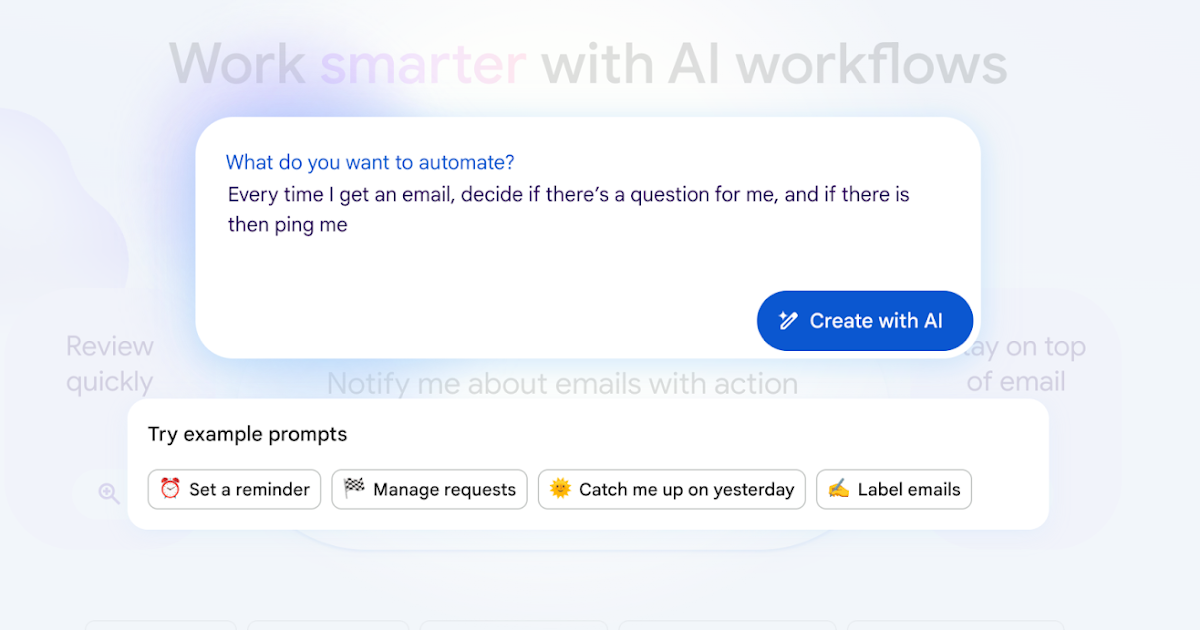




Despite the recent success of automation agencies, a major shift is underway: the technical skill of automation implementation is rapidly losing value. As Artificial Intelligence (AI) advances, the skills that once commanded high prices knowing every tool module or API endpoint—will soon be automated away. The future belongs not to the tool user, but to the business architect who can interface with the new AI-powered systems.
This article details why learning automation in 2026 is one of the worst career moves, and outlines the three high-leverage skills professionals must master to thrive in the new economy.
The Inevitable Obsolescence of Technical Execution
The common advice to master specific no-code or low-code tools like Make.com or N8N and understand the intricacies of APIs is rapidly becoming a “big lie.” AI is progressing so fast that the technical skills people are trying to learn today will likely be automated away before they have the time to fully master them and capitalize on that expertise.
The value in systems is relentlessly moving upward. While automation itself remains valuable, it still optimizes multi-million dollar businesses, the implementation is becoming commoditized. Tools are increasingly capable of handling the heavy lifting, meaning the act of manually dragging-and-dropping modules is growing less and less valuable.
The pattern is clear: every technical revolution invalidates the skills at the margins (the surface-level technical execution), and the value moves up the chain.
🧵 The Scroll Illuminator Analogy: A Shift in Value
To understand why technical automation skills are rapidly becoming obsolete, we can look at the historical precedent of the Scroll Illuminator, a skilled medieval artisan responsible for transcribing and illustrating important texts. This analogy illustrates how value shifts with every major revolution:
Phase 1: The Artisan’s Skill (Low Leverage)
- The Artisan: Elara the Illuminator.
- The Skill: Elara spends years mastering 30 different calligraphy fonts, meticulously mixing pigments from rare minerals, and achieving perfect gold leaf application on vellum scrolls. Her technical skill is rare and valuable. Her income is directly tied to her precision, speed, and mastery of manual techniques.
- Analogy to Automation: The current automation expert who has manually mastered every node in N8N or every module in Make.com.
Phase 2: The Printing Revolution (New Tool, New Skill)
- The New Technology: The Printing Press arrives.
- The Shift: Elara’s descendants no longer spend their lives mixing paints and mastering calligraphy. That manual process is now done by a machine. Instead, they must learn to operate, maintain, and set the complex type blocks of the printing press.
- The Value: The value moves from the manual execution (calligraphy) to the maintenance and operation of the automated tool (the press).
Phase 3: The Digital Design Revolution (Software and Templates)
- The New Technology: Desktop Publishing and Digital Design emerge.
- The Shift: The need to physically set type blocks and operate a bulky press vanishes. Elara’s descendants now master software like InDesign or QuarkXPress. They learn the specific parameters, menus, and file formats necessary to create a perfect digital page layout.
- The Value: The value moves from operating physical hardware to mastering complex, multi-functional software.
Phase 4: The AI Revolution (Strategy and Communication)
- The New Technology: AI Design Agents and Generative Models (e.g., ChatGPT, Midjourney).
- The Shift: Elara’s lineage no longer needs to spend years mastering every menu item in design software. They simply need to prompt the AI with strategic instructions: “Design a 12-page book layout for a historical biography, using a classic Renaissance font and a gold/blue palette, ensuring maximum readability for readers aged 50+.”
- The Highest Value: The worth is no longer in the how (the technical software skill) but in the what and why (the strategic communication of desired aesthetic, audience, and business objective).
The Takeaway: Just as the illuminator’s calligraphy became obsolete, and the press operator’s type-setting became obsolete, the automation builder’s knowledge of specific tool modules will soon be replaced by AI. The enduring value is found in the ability to define, structure, and communicate the strategic business requirement.
The Three High-Leverage Skills for the AI Economy
If automation is an expiring skill, what should professionals learn to position themselves for maximum success and leverage in 2026 and beyond?
1. Stop Memorizing Tools, Start Identifying Problems
The future highly-paid professional will bring value not through their knowledge of specific tools, but through their knowledge of business requirements.
In 2020, knowledge of every API endpoint was rare and valuable. In 2025, an AI model can be given documentation and find a relevant solution. By 2026–2027, AI will be able to build entire automation systems—CRMs, sales pipelines, inventory systems—from the business requirements alone, described in plain English.
Therefore, the future skill will be:
- Stop memorizing tool features and API documentation.
- Start understanding business systems and patterns in value creation.
- Stop learning to drag and drop modules.
- Start learning how to identify problems worth more than $50,000 to solve.
The most successful people in 2026 will be the best business problem identifiers who happen to use AI as a tool to solve them.
2. Master Communication: The CLEAR Prompting Framework
The ability to communicate with AI models is the new high-lever skill. As AI becomes capable of instantiating complete, complex workflows from natural language, businesses will pay premium rates for your ability to do this cleanly, logically, and effectively.
The following framework, known as CLEAR, is used by high-quality enterprise applications to constrain AI’s flexibility and produce reliable business outcomes:
| Element | Definition | What it Means for Prompting |
| Clarity | Precise problem definition with measurable outcomes. | Don’t say: “Build me a lead gen system.” Say: “Create a one-page qualification SOP that identifies companies with 50+ employees in manufacturing that have expressed interest in automation.“ |
| Logic | Structured thinking the AI can follow and execute. | Break complex problems into sequential steps with clear decision points that the AI must follow. |
| Examples | Providing specific scenarios and edge cases. | Define outcomes: “If a lead scores above 80 points, route to a senior sales rep. If below 50, send to a nurture sequence. If between 50 and 80, schedule an automated demo call.“ |
| Adaptation | Iterative refinement based on AI feedback. | The real skill is not the first prompt, but the conversation—refining and improving the output based on evaluation. |
| Results | Validating that the output matches business requirements. | Can you measure success and prove a return on investment (ROI)? |
A well-crafted prompt uses this framework to constrain the AI’s inherent flexibility into a predictable, consistent, and profitable direction.
3. Systems Thinking: Understanding the Shape of Business
The highest level of abstraction is systems thinking, which transcends whatever specific technology happens to be popular at a given moment.
Elite athletes understand movement patterns, training systems, and competitive strategy—the shape of athletic performance—not just the specific techniques of one game. The same principle applies to business.
An AI automation agency and a marketing agency are structurally almost the exact same: they have similar client acquisition systems, project management, team structures, and pricing models. If you understand the shape of a service business, you can make any service business work.
The most valuable skill is understanding the general flow of value, which is consistent across any business model, whether you’re selling websites, automations, or legal advice:

By learning this shape—this “general container”—you are insulated from changes in the underlying tactics or technology. You can thrive because you understand the wider strategy that never changes, as it is rooted in universal human psychology and economic principles.
Conclusion: Embrace the Shift
Automation skills are at the margins and have an expiration date. Technology consistently moves us to higher levels of abstraction, reducing the need for low-level technical effort and dramatically increasing the potential for leverage.
The key takeaways are clear:
- Prior skill (Automation Implementation) is at the margins and will be invalidated quickly.
- New higher-level skill is communicating business requirements to models (e.g., using the CLEAR framework).
- The highest-level skill is systems thinking—understanding the general flow of value and the shape of a business container.
Professionals must pivot away from tool memorization and toward business strategy, problem identification, and high-quality AI communication to position themselves to win in this new, rapidly evolving economy.





Leave a Reply